
Data lineage: see exactly where your sensitive data flows
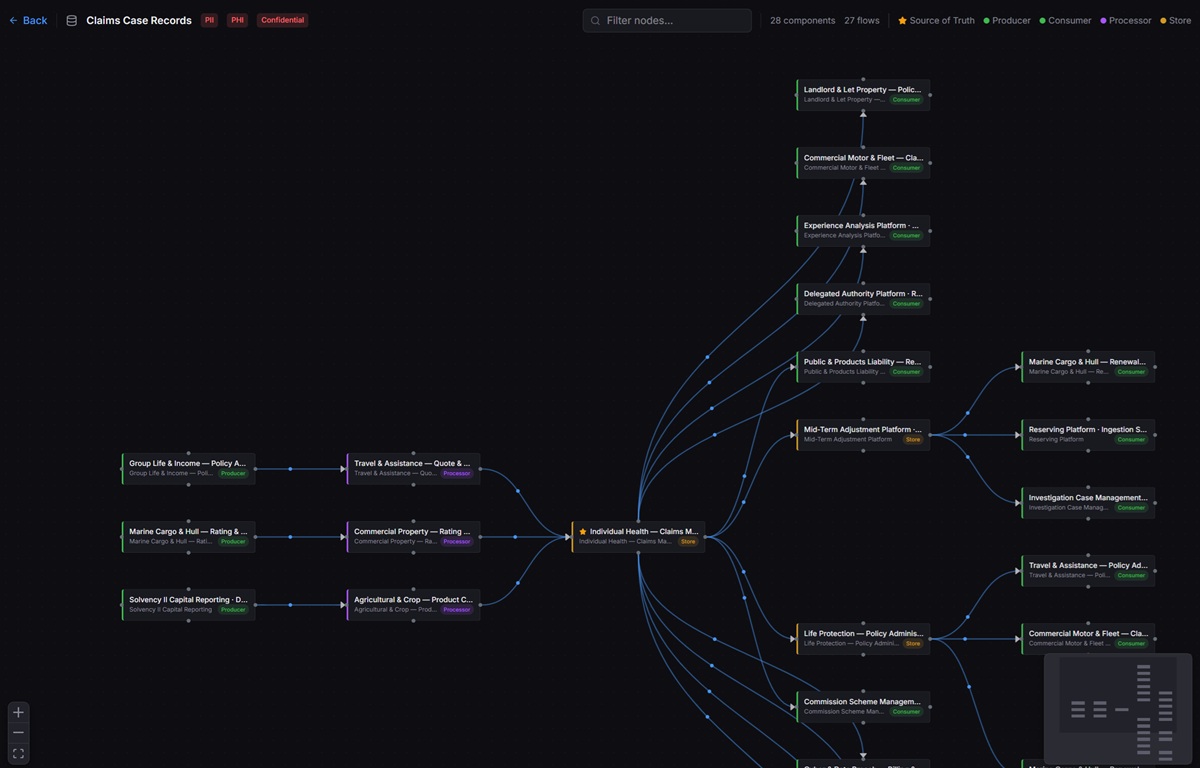
Dependra materialises a dataset's lineage graph from your component and dependency links — showing which systems produce, consume and are source-of-truth — so a change, or a breach, becomes a query rather than a spreadsheet exercise.
What it is
Data Lineage materialises a dataset's flow graph from component-dataset and dependency-dataset links, so data owners can see how a dataset moves through the estate and what a change would ripple into.
Because datasets carry a classification level — including pii,
phi and financial — this is also a
compliance artifact: it maps where personal and sensitive data
actually flows across systems, the data-flow evidence that underpins a
GDPR Article 30 record of processing and a DPIA.
How it works
- Catalogue datasets. Each with a classification level, legal basis, retention and regulatory exposure as first-class fields.
- Link them to components. Mark which components produce, consume and are source-of-truth for the data.
- Materialise the lineage. Dependra assembles the flow graph across the estate, with per-user layout persistence.
- Scope a change or a breach. "If this data is compromised, which systems, owners and audiences are in scope?" becomes a query.
The outcome
GDPR Article 30 evidence
The structured data-flow documentation behind a Record of Processing Activities — built from real links, not a bolt-on module.
Breach scoping in a query
Datasets are first-class blast-radius starting points, so a data-compromise scenario scopes to the exact systems and owners involved.
Change-impact clarity
See what a schema or ownership change ripples into before you make it — producers, consumers and downstreams alike.
Trace your sensitive data end to end
Model your datasets and their component links, then materialise the lineage graph to see where pii, phi and financial data actually flows. No payment required to trial.
Start free trial